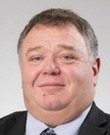
Llew Jones' Issue Positions (Political Courage Test)
Office:
- State House (MT) - District 18, Republican
Key
Official Position: Candidate addressed this issue directly by taking the Political Courage Test.
Inferred Position: Candidate refused to address this issue, but Vote Smart inferred this issue based on the candidate's public record, including statements, voting record, and special interest group endorsements.
Unknown Position: Candidate refused to address this issue, or we could not infer an answer for this candidate despite exhaustive research of their public record.
Additional Information: Click on this icon to reveal more information about this candidate's position, from their answers or Vote Smart's research.
Other or Expanded Principles & Legislative Priorities are entered exactly as candidates submit them. Vote Smart does not edit for misspelled words, punctuation or grammar.
Llew Jones has provided voters with clear stances on key issues by responding to the 2024 Political Courage Test.
Montana State Legislative Election 2024 Political Courage Test
| Pro-life | a) Do you generally support pro-choice or pro-life legislation? | ||
| Yes | b) Do you support legalizing abortion when the pregnancy resulted from incest or rape? | ||
| Yes | c) Do you support the prohibition of public funds (e.g. Medicaid) for organizations that perform abortions? | ||
| The Hyde Amendment is a legislative provision that prohibits the use of federal funds for abortions, except in cases of rape, incest, or when the life of the mother is at risk. It primarily affects Medicaid and other federal health programs. This is my goal for Montana. The complicating factor is that in 1999, the Armstrong v. State case in Montana by the Montana Supreme Court held that the state's constitution protects the right to abortion. This decision affirmed that the right to privacy under the Montana Constitution includes the right to make personal medical decisions, including the choice to have an abortion. Thus, state funding is not fully aligned with the Hyde Amendment to the extent I would like. I would address the 1999 decision if possible, to align with Hyde, but I do not support efforts to not renew Medicaid expansion. | |||
| Yes | a) In order to balance the budget, do you support limiting state government spending on social programs (e.g. SNAP, TANF)? | ||
| Yes | b) Do you support a decrease in income taxes in order to promote economic growth? | ||
| No | c) Do you support a wealth tax in order to pay for public programs in your state? | ||
| Government money is a scarce resource, and it should always be treated as such. Every dollar comes from the hard-earned income of taxpayers, so we have a duty to spend it wisely and efficiently. My approach to fiscal policy is rooted in the belief that government should focus on providing only the essential services, those that protect public safety, infrastructure, and education, while promoting individual responsibility and self-reliance. Social programs, while necessary for the most vulnerable, must be structured in a way that encourages long-term independence, not dependency. By limiting excessive spending on these programs and ensuring resources are allocated to those truly in need, we maintain the integrity of the budget and avoid placing undue burden on taxpayers. Reducing taxes, especially income taxes, is key to promoting economic growth and opportunity. When businesses and individuals keep more of their own money, they invest, create jobs, and strengthen the local economy. I've consistently supported reducing the tax burden on Montanans, whether through income tax cuts or property tax relief, because economic freedom fuels growth. Finally, I firmly oppose wealth taxes. Penalizing success discourages investment and innovation, which are the backbone of our state's prosperity. Instead of creating new taxes that stifle ambition, we should focus on making government more efficient and responsive, ensuring that every tax dollar works to benefit the people it serves. By embracing fiscal responsibility and smaller, more effective government, we can preserve Montana's values | |||
| Yes | a) Do you support capital punishment for violent crimes? | ||
| Yes | b) Should an individual under 18 accused of a violent crime be prosecuted as an adult? | ||
| Yes | c) Do you support the enforcement of federal immigration laws by state and local police? | ||
| Yes | d) Do you support the use of private prisons? | ||
| Yes | e) Do you support mandatory minimum sentences for nonviolent drug offenders? | ||
| Capital Punishment: I support the use of capital punishment as a deterrent, but only in cases where there is absolute certainty of guilt. It should be reserved for the most heinous crimes, and our justice system must ensure there is no doubt about the accused's responsibility before taking such an irreversible step. This ensures justice is served without the risk of wrongful execution. Juvenile Prosecution: For individuals under 18 accused of violent crimes, I believe prosecution as an adult should depend on the circumstances. Age matters: an offender close to 18 may need to face adult consequences, but we should also remember that young people's minds are not fully developed. Where possible, we must focus on rehabilitation to correct behavior, allowing these individuals the opportunity to grow into productive members of society. Immigration Enforcement: I support state and local police enforcing federal immigration laws. Ensuring our borders are secure and our laws are upheld requires cooperation across all levels of government. State and local law enforcement have a role in maintaining the rule of law when it comes to illegal immigration. Private Prisons: I support the use of private prisons, provided they are subject to strict oversight and regular audits. It is vital to ensure these institutions are focused on rehabilitation and reducing recidivism. The goal is not merely to incarcerate but to provide the tools needed for inmates to reintegrate into society. Mandatory Minimum Sentences for Nonviolent Drug Offenders: My stance on mandatory minimum sentences is nuanced. I believe it depends on the type of drug and the circumstances surrounding the case. Fentanyl, for example, has devastating consequences on public health and safety, and should warrant more severe penalties than drugs like marijuana. We must differentiate between dangerous substances and focus on getting offenders the help they need when appropriate. In all these areas, my priority is to balance justice with fairness, recognizing that each case is unique. The goal is always to uphold public safety while offering pathways for rehabilitation and personal growth where possible. | |||
| No | a) Do you support state government spending as a means of promoting economic growth (e.g. grants, tax incentives)? | ||
| Yes | b) Do you support reducing state government regulations on the private sector (e.g. for business or the environment)? | ||
| No | c) Do you support an increase of the minimum wage of Montana? | ||
| Yes | d) Do you support government spending on affordable housing projects in Montana? | ||
| State Spending to Promote Economic Growth: I generally believe government should stay within its core functions. However, I do recognize that some government spending is necessary to build the foundational infrastructure needed for economic growth. Investments in water, sewer, roads, public safety, and emergency services are essential for any thriving community. These projects lay the groundwork for businesses to succeed and communities to grow. That said, beyond essential infrastructure, I'm cautious about state government using spending to promote growth. Rather than direct government intervention, I prefer fostering a strong, independent private sector that thrives without excessive reliance on public funds. Reducing State Regulations on the Private Sector: I support reducing government regulations to ensure businesses can thrive, but with a nuanced approach. While there needs to be enough regulation to prevent environmental degradation and protect public health, overregulation can stifle innovation, hinder small businesses, and limit opportunities. It is possible to balance economic development with environmental responsibility. Responsible development of natural resources and business expansion can be done cleanly and respectfully. Excessive regulation often benefits larger corporations by creating barriers to entry for small businesses, monopolizing the market, and reducing opportunities for future generations. We need common-sense regulations that promote sustainable growth without stifling entrepreneurial efforts. Minimum Wage Increase: I do not support increasing Montana's minimum wage. While well-intentioned, raising the minimum wage can often have unintended consequences, such as reducing job opportunities for those just entering the workforce. Young people and those seeking entry-level positions are often the most affected, as businesses may reduce hiring or cut hours to offset higher wages. Rather than mandating wage increases, I believe in fostering a healthy, competitive economy that naturally leads to better-paying jobs through business growth and innovation. Creating a more dynamic job market will provide more opportunities for everyone, including higher wages over time without the risk of job loss. Government Spending on Affordable Housing: I support government involvement in affordable housing but with a focus only on increasing supply. Rather than direct subsidies, I believe the state should invest in infrastructure like water, sewer, and road projects that enable communities to expand their housing stock. This must be paired with zoning reforms to encourage multifamily housing, accessory dwelling units, and manufactured homes in areas where demand is high. The key to addressing housing shortages is to increase supply, not artificially inflate demand. By supporting infrastructure improvements and smart zoning, we can help ensure that more affordable housing options are available to Montanans without distorting the market. | |||
| No | a) Do you support adopting federal education standards (e.g. Common Core) in Montana? | ||
| Yes | b) Do you support state funding for charter schools? | ||
| Yes | c) Do you support increasing teacher salaries AND/OR benefits in Montana? | ||
| No | d) Should immigrants in the United States who graduate from Montana high schools be eligible for in-state tuition at public universities, regardless of immigration status? | ||
| Federal Education Standards: I do not support the adoption of federal education standards like Common Core in Montana. While I fully endorse rigorous academic and career-focused education, I believe control over education should remain as local as possible. Montana's unique socio-economic conditions, coupled with the diverse needs of our communities, mean that a one-size-fits-all federal approach is not suitable. Local school boards, educators, and especially parents should have a strong voice in shaping educational standards to ensure they reflect the values and needs of their communities. Parental input should be central to decision-making at every stage of the educational process. Charter Schools: I support state funding for charter schools, as they offer an alternative path for students to excel, particularly when they adopt innovative practices that enhance educational outcomes. However, this is a nuanced position. Even in states with extensive school choice options, the vast majority of students continue to attend public schools. Therefore, while promoting charter schools, we must also ensure that public schools remain strong and continue to provide excellent opportunities for the majority of students. HB 549, which supported public charter schools in Montana, is an example of legislation I back that seeks a balanced approach. Additionally, due to Montana?s large number of very rural, small schools, it is unlikely that both a regular public school and a public charter school could successfully survive in the same area. We must be cautious not to destabilize public schools in these rural communities while still supporting innovation and choice. Teacher Salaries and Benefits: I support increasing teacher salaries and benefits in Montana, especially for early-career teachers, where the need is most urgent. The data shows that Montana ranks near the bottom nationally in starting teacher pay, and this impacts our ability to attract and retain high-quality educators. The TEACH Act, which I carried, is designed to address this by raising starting wages. Looking forward, the STARS Act I am proposinbg builds upon this by offering incentives for schools that meet both teacher pay and student success benchmarks. The goal is to ensure competitive wages and benefits that help Montana keep its best educators while fostering educational excellence statewide. In-State Tuition for Immigrant Students: This is a nuanced issue. While I do not support automatic in-state tuition for immigrants regardless of status, I recognize the complexity of individual cases. If a child has been living in Montana for several years, attending local schools, and contributing to the community, I am inclined to support providing that child with access to in-state tuition at public universities. However, it would be unfair to offer this benefit to individuals who recently crossed the border illegally and now seek a subsidized education at the expense of Montana taxpayers. My concern lies in balancing fairness for both the children involved and the taxpayers who fund our educational system. | |||
| No | a) Do you support state funding for the development of renewable energy (e.g. solar, wind, geo-thermal)? | ||
| Yes | b) Do you support state governments allowing permits for drilling on public lands? | ||
| No | c) Do you support increasing state funding for clean drinking water initiatives? | ||
| State Funding for Renewable Energy Development: I do not support state funding for the development of renewable energy, such as solar, wind, or geothermal. My stance is based on the belief that we should adopt an "all-of-the-above" approach to energy. I recognize that while fossil fuels, particularly coal, have historically been a critical part of Montana's energy sector, demand for coal has dramatically decreased on the West Coast, driving changes in production. While I firmly believe that coal and fossil fuels can be produced cleanly and should remain part of our energy mix as reliable baseload power, production is ultimately driven by market demand. I oppose subsidizing any one form of energy, whether it's fossil fuels or renewables. However, I also oppose any attempts to restrict renewable energy production or tax it unfairly. The market should dictate which energy sources are developed, and I am committed to ensuring that Montana's energy landscape remains diverse without unnecessary government intervention. Permits for Drilling on Public Lands: Yes, I support allowing permits for drilling on public lands, provided it is done in a responsible manner. Montana's natural resources are critical to our economy, and we must make them available for development. However, I strongly believe that drilling and extraction must be done with a recognition of Montana's unique environmental sensitivities. Clean water must be protected, and drilling should be kept away from particularly sensitive areas. Striking the right balance between energy development and environmental stewardship is key to ensuring long-term sustainability and protecting Montana's natural beauty for future generations. State Funding for Clean Drinking Water Initiatives: While I do not support direct increases in state funding for clean drinking water initiatives, my position is nuanced. I fully support state programs that invest in the underlying infrastructure needed to ensure safe and reliable water supplies. For example, the Montana Treasure State Endowment Program (TSEP) has been successful in funding critical water and sewer projects across the state, ensuring that communities have access to clean drinking water. My preference is for state resources to focus on infrastructure improvements that benefit entire communities rather than creating additional layers of spending or programs. By investing in the basic infrastructure that ensures water quality, we can safeguard public health without expanding unnecessary government programs. | |||
| Yes | a)Do you support limiting campaign contributions from corporations, unions, and individuals? | ||
| Yes | b) Do you support the use of an independent or bipartisan commission for redistricting? | ||
| Yes | c) Do you support requiring a government-issued photo identification in order to vote at the polls? | ||
| No | d) Do you support automatic voter registration? | ||
| No | e) Do you support the implementation of ranked choice voting in Montana? | ||
| Yes | f) Do you support changing Montana's elections to a "Top-Four" primary system? | ||
| Limiting Campaign Contributions: I support limiting campaign contributions from corporations, unions, and individuals, though it's a complex issue. While I believe in free speech, including using money to spread messages, unlimited spending by any one group can distort elections. It risks drowning out other voices and making it hard for voters to discern fact from fiction. We're seeing this in the current Montana Senate race, where excessive spending has overwhelmed the airwaves. Balancing free speech with preventing undue influence is crucial to maintaining a fair process. Independent or Bipartisan Commission for Redistricting: I support using independent or bipartisan commissions for redistricting, though achieving true independence is difficult. While these commissions aim to create fair district lines, the political leanings of those involved, including the judiciary, can influence outcomes. In Montana, the courts lean Democrat, raising concerns about impartiality. While I back the concept, we must be vigilant about maintaining real independence. Voter ID Requirement: I support requiring government-issued photo IDs to vote. Ensuring voter integrity is key to maintaining trust in elections. Just as IDs are required for many basic activities, they should also be required for voting to protect against fraud. This is a simple way to ensure only eligible voters cast ballots. Automatic Voter Registration: I do not support automatic voter registration, but I don't believe voter registration should be overly difficult. I supported a plan to close voter registration one day before polls opened to allow clerks to focus on verifying voter integrity. However, the courts disagreed with this approach. There needs to be a system that encourages participation while maintaining the integrity of voter rolls. Ranked Choice Voting: I do not support ranked choice voting in Montana, but I acknowledge it might become necessary if the top-four initiative passes. My concern is ensuring the winner receives a majority (50% plus one) rather than a simple plurality. If ranked choice, instant run off, or another run-off method can help achieve this majority in a fair way, I will respect the public's choice while promitng a workable sytem. Top-Four Primary System: I support the top-four primary system because it empowers individual Montanans to vote for their preferred candidate without being constrained by party labels. This system gives voters more freedom to choose based on values, not party lines, and reduces the influence of party machines over elections. At a time when partisanship and division dominate national politics, this reform could help bring more reasonable voices to the forefront. My focus remains on ensuring that the winner ultimately has majority support, and I believe the top-four system helps move us toward that goal while giving more power to the people of Montana. I will respect the outcome of Initiative 126 and work to implement it thoughtfully. | |||
| No | a) Do you generally support gun-control legislation (e.g. red flag laws, closing the boyfriend loophole)? | ||
| No | b) Should background checks be required on gun sales between private citizens at gun shows? | ||
| Yes | c) Do you support the right to concealed carry in Montana? | ||
| As a representative of a district that is strongly pro-Second Amendment, I firmly believe in protecting the rights of law-abiding citizens to own and carry firearms. The Second Amendment is not just a legal right, but a core value to many Montanans who see it as vital to their personal freedom and safety. Any limits on gun ownership or use should only be tied to situations involving clear criminal activity or proven mental health deficiencies. We must be cautious of government overreach, particularly from administrations that seek to impose their own visions on the country. Each new set of gun restrictions risks infringing on the fundamental rights of responsible gun owners. Background Checks at Gun Shows: I do not support background checks for private sales at gun shows. While I fully understand the desire to ensure guns do not end up in the wrong hands, additional regulations like these infringe on private transactions between law-abiding citizens. Existing federal and state laws already cover many aspects of firearm sales, and I do not believe adding layers of regulation will solve the problem of gun violence. The focus should be on enforcing the laws we already have, ensuring those who are prohibited from owning guns due to criminal activity or mental health issues are properly identified through current systems. More restrictions won't stop those intent on committing crimes. Concealed Carry: I strongly support the right to concealed carry in Montana. Responsible citizens should have the right to defend themselves and their families, and concealed carry offers an important tool for personal protection. However, I also respect the rights of property owners to decide what is allowed on their premises. Just as individuals have the right to carry firearms, businesses and homeowners have the right to determine whether guns are permitted in their own spaces. This balance of rights ensures that both personal freedom and property rights are upheld. Existing Gun Laws: Montana already has enough gun laws on books, and our focus should be on better enforcing them, not creating new regulations. I am concerned that adding more laws will only erode our Second Amendment rights over time, without addressing the root causes of gun violence. Law enforcement needs the resources and support to ensure that existing laws, such as background checks for commercial sales and restrictions on those with criminal records or mental health concerns, are fully enforced. Rather than layering more restrictions, we should be focusing on practical solutions that keep firearms out of the hands of criminals while protecting the rights of law-abiding citizens. In conclusion, I am committed to upholding the Second Amendment and ensuring Montanans retain their right to bear arms. Any new restrictions or laws must be scrutinized carefully to ensure they do not infringe on the rights of responsible gun owners. | |||
| Yes | a) Should the state government increase funding for treatment facilities to combat opioid abuse? | ||
| No | b) Do you support a government-run (e.g. single-payer) healthcare program such as Medicare-for-All? | ||
| No | c) Should an individual have the right to choose to die (e.g. those with a terminal illness) through euthanasia? | ||
| No | d) Do you support mandating vaccinations (e.g. for school or employment)? | ||
| No | e) Do you support expanding paid family AND/OR medical leave benefits (e.g. maternity leave)? | ||
| No | f) Should the government be able to regulate the cost of prescription drugs? | ||
| Yes | g) Do you support the 2023 ban on gender-affirming medical care for minors passed in Montana? | ||
| Opioid Abuse Treatment Funding: Yes, I support increasing funding for opioid abuse treatment facilities. This crisis threatens public safety, overfills prisons, and harms our economy. While I'm generally cautious about government spending, the cost of inaction is too high. I believe additional funding should be linked to marijuana legalization revenue, which I see as contributing to the rise in drug abuse. Investing in treatment now is essential to curbing Montana's drug problem and protecting our communities. Single-Payer Healthcare: I do not support a government-run healthcare system like Medicare-for-All. In countries with such systems, healthcare is often slow and inefficient, leading to long wait times and reduced quality of care. I believe the private sector is better equipped to provide responsive, high-quality healthcare. Government control risks lowering service quality and increasing costs without solving the real issues of access and affordability. Euthanasia: No, I do not support euthanasia, even for terminally ill patients. While I value personal freedom, I worry about a "slippery slope" where life is devalued. Permitting euthanasia could lead to pressure on vulnerable individuals to end their lives prematurely. Though difficult, preserving life even in tough circumstances is essential. Vaccine Mandates: I do not support blanket vaccination mandates. However, in certain settings where people work with vulnerable populations, such as in nursing homes or emergency rooms, vaccination should be expected. Surgeons, for example, should be vaccinated for diseases like hepatitis. Personal freedom is important, but public safety in high-risk environments must also be considered. Paid Family and Medical Leave: No, I do not support expanding government-mandated paid family or medical leave. This is a matter that should be negotiated between employers and employees, not imposed by the government. Mandating such benefits could limit the flexibility businesses need to succeed. Leave policies should be set by individual companies based on their specific needs and workforce. Prescription Drug Price Regulation: I do not support direct government regulation of drug prices. However, the government should address predatory pricing and monopoly practices to protect vulnerable individuals in need of medications. We need to ensure pharmaceutical companies are not exploiting consumers, but heavy regulation could stifle innovation and limit access to new treatments. Gender-Affirming Care for Minors: Yes, I support the 2023 ban on gender-affirming care for minors. Young people are not mature enough to understand the long-term consequences of such procedures. Studies from Europe show that supposed benefits in suicide prevention have not held up over time, leading many countries to move away from this practice. Additionally, I oppose post-puberty boys competing in girls' sports, as it is unfair to hardworking female athletes. | |||
| No | a) Do you support inclusion of sexual orientation in Montana's anti-discrimination laws? | ||
| No | b) Do you support the inclusion of gender identity in Montana's anti-discrimination laws? | ||
| No | c) Do you support greater efforts by Montana's state government in closing gender, racial, and other wage gaps? | ||
| I believe in treating everyone with respect and ensuring that the best person for the job is hired, regardless of their sexual orientation or gender identity. However, I do not support expanding Montana's anti-discrimination laws to include sexual orientation or gender identity. My stance is rooted in the belief that laws should protect individual freedoms without mandating certain ideologies or beliefs. I am also concerned that modern discussions on issues like "gender identity" and the "woke agenda" have become overly intrusive, often encroaching on the rights and beliefs of others. While I respect people's right to express their identity, I do not support government-enforced mandates that compel acceptance of certain ideas, particularly when it comes to youth gender realignment or allowing boys to compete in girls' sports. In terms of wage gaps based on gender, race, or other factors, I do not believe the government should intervene further. My focus is on ensuring that all individuals are treated fairly and given equal opportunity, with hiring decisions based solely on merit. The best-qualified person should get the job, regardless of external characteristics. I believe that discussions of concepts like "white privilege" can often be divisive, and the focus should be on individual ability and effort rather than group identity. | |||
| If elected, my top priorities will focus on improving education, reducing property taxes, and ensuring Montana's government remains fiscally responsible while protecting our communities. 1. Enhancing Education through the STARS Act I plan to propose and draft the STARS Act (Student and Teacher Advancement for Results and Success), which will address both teacher pay and student outcomes. The STARS Act will help increase starting teacher salaries, improving recruitment and retention of quality educators. It will also incentivize schools to enhance student success through dual credit programs and career/vocational education enhancements, preparing students for high-demand jobs. Additionally, the STARS Act recognizes that many of our local schools have been capped below inflation rates, further shifting the financial burden onto local property taxpayers. By increasing state support, we can better fund our schools and reduce the reliance on local property taxes, ensuring education funding keeps pace with inflation. This initiative will be funded through reallocating resources within the state's education budget, focusing on programs that produce measurable results. 2. Reducing Residential Property Taxes I also aim to reduce property taxes for Montana homeowners and long-term rental properties. With an influx of out-of-state residents purchasing vacation homes, many of whom do not contribute through Montana income taxes, it's time to ensure they pay their fair share for the services they benefit from. By adjusting the tax structure to better reflect these realities, we can reduce the burden on full-time Montana residents without shifting the costs to in-state businesses, farmers, or ranchers. Targeted property tax reforms will help make the system more equitable while easing the strain on local taxpayers. 3. Strengthening the Fire Fund to Protect Lives, Property, and Air Quality Lastly, I will work to further refine the fire suppression fund I created through HB 883 to ensure Montana is better equipped to handle the increasing threat of wildfires. This fund will help improve initial response times, especially for fires on federal lands that pose a threat to Montana's communities. Enhancing fire preparedness not only protects lives and property but also helps maintain clean air by reducing the impact of wildfire smoke. Funding for these efforts will come from responsible general fund allocations, ensuring we remain fiscally sound while safeguarding our environment and public health. By focusing on these priorities, we can improve education, provide meaningful tax relief, and protect our communities, all while keeping Montana,s government fiscally responsible and efficient. |
Vote Smart does not permit the use of its name or programs in any campaign activity, including advertising, debates, and speeches.